Seems like something might be up with Griff again.
Check out his Instagram. There was an apparent video of him waving a gun, but it looks like it's been deleted.
Mental Health Disorder Statistics
- Lane Johnson is 6-foot-6, 325 pounds. He earns about $18 million per season and is considered one of the best right tackles in the NFL.
Johnson's Eagles teammates describe him as gregarious, outgoing and constantly joking around with them.
"Everybody in here loves that guy," Eagles center Jason Kelce said. "He’s such a great personality, a great person to be around. A guy that really makes our room a lot more fun, a lot more energetic."
Earlier this week, Johnson revealed that the 2½-week leave of absence he took from the team was to battle depression and anxiety.
This puts Johnson in the company of a growing list of prominent athletes who have admitted to a mental health illness over the past year.There's Dallas Cowboys quarterback Dak Prescott, who said he battled anxiety and depression while recovering from two ankle surgeries. Prescott's brother committed suicide in April 2020.
There's Olympic gymnast Simone Biles, tied for the most medals in U.S. gymnastics history, who withdrew from five of her events at the Tokyo Olympics last summer because of the "twisties," a disconnect between her mind and body during competition.
There's tennis star Naomi Osaka, who cited anxiety in declining to attend her press conference after a match at the French Open. That led to her withdrawal from the event.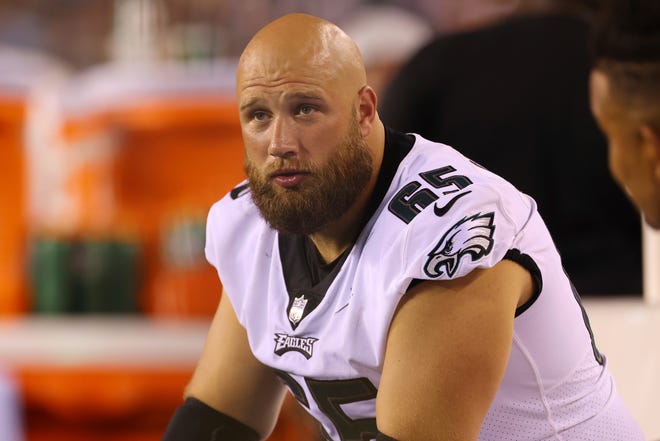 According to the National Alliance of Mental Illness, one in five adults in the United States, roughly 47 million, are dealing with a mental illness. Projected onto a 53-man NFL roster, that could be 10 players.
Johnson missed three games during his absence and is expected to play Sunday when the Eagles face the Las Vegas Raiders. He wrote in a Twitter post upon his return that he was battling depression and anxiety, saying that it was something he kept hidden from his friends and family members for years.
- Mental health disorders account for several of the top causes of disability in established market economies, such as the U.S., worldwide, and include: major depression (also called clinical depression), manic depression (also called bipolar disorder), schizophrenia, and obsessive-compulsive disorder.
- An estimated 26% of Americans ages 18 and older -- about 1 in 4 adults -- suffers from a diagnosable mental disorder in a given year.
- Many people suffer from more than one mental disorder at a given time. In particular, depressive illnesses tend to co-occur with substance abuse and anxiety disorders.
- Approximately 9.5% of American adults ages 18 and over, will suffer from a depressive illness (major depression, bipolar disorder, or dysthymia) each year.
- Women are nearly twice as likely to suffer from major depression than men. However, men and women are equally likely to develop bipolar disorder.
- While major depression can develop at any age, the average age at onset is the mid-20s.
- With bipolar disorder, which affects approximately 2.6% of Americans age 18 and older in a given year -- the average age at onset for a first manic episode is during the early 20s.
- Most people who commit suicide have a diagnosable mental disorder -- most commonly a depressive disorder or a substance abuse disorder.
- Four times as many men than women commit suicide. However, women attempt suicide more often than men.
- The highest suicide rates in the U.S. are found in Caucasian men over age 85. However, suicide is also one of the leading causes of death in adolescents and adults ages 15 to 24.
- Approximately 1% of Americans are affected by schizophrenia.
- In most cases, schizophrenia first appears in men during their late teens or early 20s. In women, schizophrenia often first appears during their 20s or early 30s.
- Approximately about 18% of people ages 18- 54 in a given year, have an anxiety disorder in a given year. Anxiety disorders include: panic disorder, obsessive-compulsive disorder (OCD), post-traumatic stress disorder (PTSD), generalized anxiety disorder (GAD), and phobias (social phobia, agoraphobia, and specific phobia).
- Panic disorder typically develops in late adolescence or early adulthood.
- The first symptoms of OCD often begin during childhood or adolescence.
- GAD can begin at any time, though the risk is highest between childhood and middle age.
- Individuals with OCD frequently can have problems with substance abuse or depressive or eating disorders.
- Social phobia typically begins in childhood or adolescence.
C’mon fellow @vikings fans,let’s show some love & support for our man @EversonGriffen & let him & his family know we’ve got his back #skol pic.twitter.com/M9bmh2jkko
— SKOLhearted_ Brit (@nechzehrer) November 24, 2021
wish nothing but the best for Griff and his family. Hope he has the support circle he needs to get better.
Tough upbringing, violent colliding brains at full speed, medications, concussion from a recent car accident.
It's a wonder how football players stay stable at all.
Sending prayers for Everson and his family. My heart goes out to them. It’s a lifetime battle that most try their best to fight alone, sadly. Hopefully he’s going to accept the help that’s there for him
@"1VikesFan" said: He obviously has stopped whatever meds, pgm he was on....so sadI have worked in the mental health field for 21 years and going off medications is not usually the cause of decompensating. The most common reason is a result of an industry terribly understaffed and overworked. Prescribers are expected to see historically large caseloads of people which has greatly decreased the amount of time spent with clients and care coordination. 20 years ago prescribers spent on average 45-60 minutes per visit, now 5-6 clients are seen an hour. States with Privatized Medicaid often see even worse numbers.
Due to that lack of time prescribers are not doing comprehensive medication reconciliations and thus not adjusting medications as they once would. Nor are they having routine labs done. So clients are on the same meds for years with no adjustments until a hospitalization or trip to the ER. Meds are not a set it and forget thing with mental health. The norm for medication management used to be appointments every 2-3 months, now you are lucky if it's 6 months. The norm for individual therapy was every 3 weeks now you are looking at 3 months. Hard to process much when you are only being seen 4 times a year.
I have a caseload of 48 and Id say 80% take their meds as prescribed and still have major mental health issues as a result of lack of provider oversight. Beyond that the holidays are absolutely terrible for this population as a whole. I have people who are employed full time 9 months out of the year but November hits and they completely decompensate to the point of needing to be moved to daily hab homes or needing staff coming to there homes daily. And then spring hits and it's like a light switches on and they snap out of the episode.
@"minny65" said:@"JimmyinSD" said: I heard that in the video that was taken down he reportedly was thanking cook for getting him the gun? Oh, great. Do they do mental health checks in Minnesota to buy a gun? Just wondering if he needed Cook to get him the gun because he was unable legally?
It varies state by state, but no state prohibits someone simply diagnosed with a mental illness from owning firearms. The only prohibition of firearms for mentally ill folks is if they are under a court ordered mental health committal. And even that is loosely followed due to lack of reporting of committals. If federally we banned all adults with mental health issues from owning firearms then a quarter of the US population wouldn't be eligible.People not affected by mental health issues are overwhelmingly the perpetrators of violent crimes and crime in general. The fact of the matter is people suffering mental health issues are 10 times more likely to be victims of a violent crime than the general population. Further, less than 5% of violent crimes in the country are perpetuated by people with serious mental health issues
@"bigbone62" said:@"minny65" said:@"JimmyinSD" said: I heard that in the video that was taken down he reportedly was thanking cook for getting him the gun? Oh, great. Do they do mental health checks in Minnesota to buy a gun? Just wondering if he needed Cook to get him the gun because he was unable legally?
It varies state by state, but no state prohibits someone simply diagnosed with a mental illness from owning firearms. The only prohibition of firearms for mentally ill folks is if they are under a court ordered mental health committal. And even that is loosely followed due to lack of reporting of committals. If federally we banned all adults with mental health issues from owning firearms then a quarter of the US population wouldn't be eligible.People not affected by mental health issues are overwhelmingly the perpetrators of violent crimes and crime in general. The fact of the matter is people suffering mental health issues are 10 times more likely to be victims of a violent crime than the general population. Further, less than 5% of violent crimes in the country are perpetuated by people with serious mental health issues
Well said. Thank you for bringing a level headed counterpoint to a complex problem.
Poor guy. My heart goes out to him. I was saying a few weeks ago, if I ever get a Vikings jersey, it will be #97’s. The way he has come back from adversity is admirable and not easy. I have knocked Zimmer from time to,time—especially this year— but I admire his response to reporters today. Someone asked, “how will this affect his chances of playing on Sunday” and Zim said, “that’s not our concern right now.”
@"bigbone62" said:@"1VikesFan" said: He obviously has stopped whatever meds, pgm he was on....so sad I have worked in the mental health field for 21 years and going off medications is not usually the cause of decompensating. The most common reason is a result of an industry terribly understaffed and overworked. Prescribers are expected to see historically large caseloads of people which has greatly decreased the amount of time spent with clients and care coordination. 20 years ago prescribers spent on average 45-60 minutes per visit, now 5-6 clients are seen an hour. States with Privatized Medicaid often see even worse numbers.Due to that lack of time prescribers are not doing comprehensive medication reconciliations and thus not adjusting medications as they once would. Nor are they having routine labs done. So clients are on the same meds for years with no adjustments until a hospitalization or trip to the ER. Meds are not a set it and forget thing with mental health. The norm for medication management used to be appointments every 2-3 months, now you are lucky if it's 6 months. The norm for individual therapy was every 3 weeks now you are looking at 3 months. Hard to process much when you are only being seen 4 times a year.
I have a caseload of 48 and Id say 80% take their meds as prescribed and still have major mental health issues as a result of lack of provider oversight. Beyond that the holidays are absolutely terrible for this population as a whole. I have people who are employed full time 9 months out of the year but November hits and they completely decompensate to the point of needing to be moved to daily hab homes or needing staff coming to there homes daily. And then spring hits and it's like a light switches on and they snap out of the episode.
bigbone62
Excellent summary of the changes in mental health care over the last 25 years. I started in community mental health 1995 and at that time one of our staff psychiatrists had already referred to himself and colleagues as “interchangeable pill dispensing machines.”
Your numbers are spot on. I now work in a mental health clinic at a university and there is a 4-6 week wait for a first appointment and 3-4 between once you get in.
These kind of medications are not a "one and done/one size fit's all" kind of thing. It's usually much more complicate--especially for more severe disorders. For example, another challenge for the psychiatrists managing psychotropics is that treating more severe conditions often requires two or more different types medication. Unfortunately there are times when for example both medication “A” and medication “B” are necessary but can also be at cross-purposes (not contraindicated) from one another and finding and maintaining the balance can be tricky—especially if your med check appointments are 3-6 months apart.
I saw a couple commercials yesterday featuring NFL players addressing Mental Health. Good to see.
I remember when Brandon Marshall was such a head case with the Broncos and then they traded to him to the Bears. He was then diagnosed with bi-polar disorder and got the help he needed -therapy and meds - and then he was a spokesman for bi-polar and was no longer erratic on or off the field. It was such an on/off switch and great to see him face a lifelong battle.
Now you see these commercials with Michael Robinson (former FB from Penn State), Hayden Hursts (TE Falcons), Joey Bosa and then Kelce taking a few weeks off for a couple weeks for mental health.
Hoping this PR helps us improve our Mental Health system as bigbone and shrink have detailed and clearly shows we need a lot of improvement within the treatment system.
Any word on his family during all this? All of heard was he was home alone, no mention of his wife and kids that I recall.
@minny65 I am glad that more athletes are speaking out about mental health. More entertainers are too. There is still a stigma around mental health. There are still people that think it's just about being happy and getting over it or picking yourself up and whatever. It takes strength to say you need help and for someone in the public eye, that can be overwhelming. Those in the public eye are paving the way and making a difference. There is still a long way to go towards understanding mental health and improving access to care as well as quality of care. More research is needed. More emphasis needs to be on better access and eliminating bias in care.
@"bigbone62" said:@"1VikesFan" said: He obviously has stopped whatever meds, pgm he was on....so sad I have worked in the mental health field for 21 years and going off medications is not usually the cause of decompensating. The most common reason is a result of an industry terribly understaffed and overworked. Prescribers are expected to see historically large caseloads of people which has greatly decreased the amount of time spent with clients and care coordination. 20 years ago prescribers spent on average 45-60 minutes per visit, now 5-6 clients are seen an hour. States with Privatized Medicaid often see even worse numbers.Due to that lack of time prescribers are not doing comprehensive medication reconciliations and thus not adjusting medications as they once would. Nor are they having routine labs done. So clients are on the same meds for years with no adjustments until a hospitalization or trip to the ER. Meds are not a set it and forget thing with mental health. The norm for medication management used to be appointments every 2-3 months, now you are lucky if it's 6 months. The norm for individual therapy was every 3 weeks now you are looking at 3 months. Hard to process much when you are only being seen 4 times a year.
I have a caseload of 48 and Id say 80% take their meds as prescribed and still have major mental health issues as a result of lack of provider oversight. Beyond that the holidays are absolutely terrible for this population as a whole. I have people who are employed full time 9 months out of the year but November hits and they completely decompensate to the point of needing to be moved to daily hab homes or needing staff coming to there homes daily. And then spring hits and it's like a light switches on and they snap out of the episode.
Lived with a mentally ill woman for 40 years and going off meds was the only thing that caused her "relapse". Obviously every case is different, was just giving an opinion based on personal experience...that's all.
@"Vikergirl" said: @minny65 I am glad that more athletes are speaking out about mental health. More entertainers are too. There is still a stigma around mental health. There are still people that think it's just about being happy and getting over it or picking yourself up and whatever. It takes strength to say you need help and for someone in the public eye, that can be overwhelming. Those in the public eye are paving the way and making a difference. There is still a long way to go towards understanding mental health and improving access to care as well as quality of care. More research is needed. More emphasis needs to be on better access and eliminating bias in care.Exactly VG. I have a daughter who is now 20 (I know you know this already VG as we have spoken about it) and she has dealt with a lot of mental health issues. I am extremely proud of how far she has come. And I actually said a few weeks ago, if I ever get anyone’s jersey it will be #97’s. I only want Everson Griffen’s because of what he has been through. His courage in acknowledging his issues and seeking help is truly admirable. I’m on his team forever.
Here's a vent. My son has to switch migraine medication because of insurance even though his medication is working. This royally sucks. He is following up with his neurologist. It sucks because you get the medication in your system and you work through the side effects and then it feels like you are either going backwards or starting all over again.
@"Vikergirl" said: Here's a vent. My son has to switch migraine medication because of insurance even though his medication is working. This royally sucks. He is following up with his neurologist. It sucks because you get the medication in your system and you work through the side effects and then it feels like you are either going backwards or starting all over again.Sorry to hear this. Has your son ever tried Axert? Its the only migraine medicine my wife has ever used that is effective in reducing a migraine's severity after its started. Significantly reduces it.
Edit Post (mod action — author will see a notice)
Warn Poster
Suspend User (3 days)
The user will be suspended for 3 days and will receive an email with the reason and information about how to appeal.